
 Spanish

Carousel Lighting Guide: How to Choose the Best LED Lights for a Carousel
Introduction
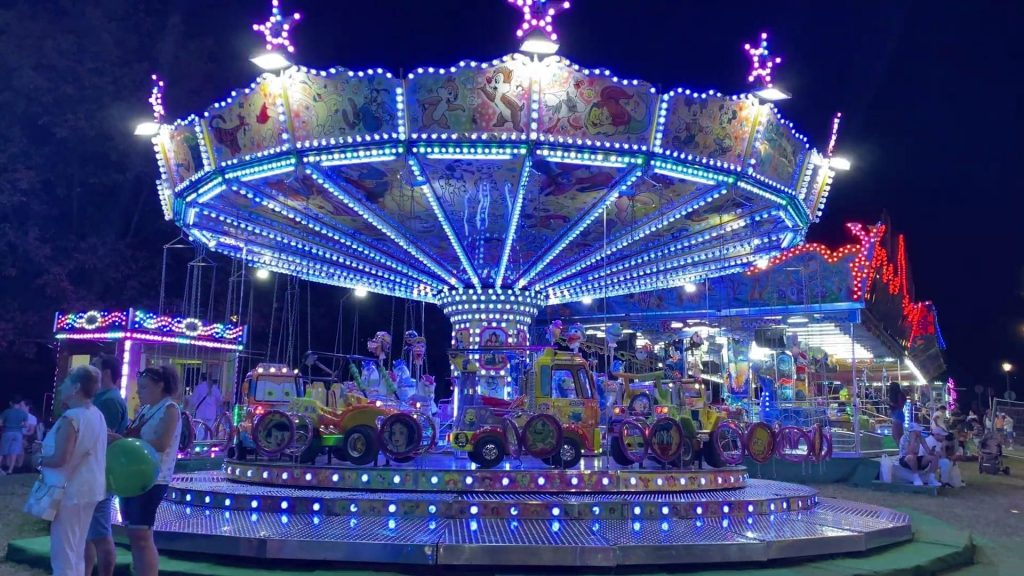
Carousel lighting is an essential part of the visual design of a merry-go-round. The right lighting system highlights decorative details, creates an attractive nighttime appearance, and helps amusement rides stand out in busy entertainment venues.
From traditional single-color bulbs to modern RGB and programmable LED systems, carousel LED lights offer a wide range of options for ride manufacturers, amusement park operators, and equipment refurbishment companies.
But how do you choose the right carousel lighting solution?
In this guide, we explain the main types of carousel lights, their applications, important purchasing considerations, and how to select a lighting system that matches your project’s design and budget.
1. What Is Carousel Lighting?
Carousel lighting refers to the decorative and functional lighting installed on merry-go-rounds and other rotating amusement rides.
A typical carousel lighting system may include LED bulbs, pixel lights, LED strips, flood lights, power supplies, controllers, and accessories.
These components can be installed in different areas of the ride, including:
- Canopy and roof edges: Define the carousel’s silhouette and create attractive lighting patterns.
- Decorative panels: Highlight colorful artwork, ornaments, and architectural details.
- Carousel horses and figures: Enhance decorative features and make the ride more visually appealing.
- Central columns and support structures: Emphasize the shape and structure of the ride.
- Platform perimeter: Create a continuous outline around the carousel.
- Interior ceiling: Add decorative illumination above riders.
The best lighting design combines these areas into a coordinated visual effect rather than treating every light as a separate element.
2. Main Types of Carousel LED Lights
Different LED lighting technologies offer different effects, levels of control, and installation requirements.
2.1 Single Color LED Lights
Single-color LED lights produce a fixed color, such as red, blue, green, yellow, white, or warm white.
They are a practical choice for traditional carousels, classic fairground designs, and projects that prioritize straightforward operation.
Key advantages:
- Simple wiring and control requirements
- Consistent color appearance
- Easy integration into many decorative layouts
- Suitable for large numbers of lighting points
- A cost-effective option for basic lighting designs
Best applications: Roof outlines, decorative borders, carousel columns, and traditional merry-go-round lighting.
2.2 RGB Carousel Lights
RGB LED lights combine red, green, and blue light sources to produce multiple colors.
They allow operators to change the carousel’s appearance for different occasions, themes, or operating periods, depending on the control system.
Key advantages:
- Multiple color combinations
- Flexible decorative effects
- Greater visual variety than fixed-color lighting
- Potential for synchronized color changes across different ride sections
Best applications: Modern carousels, family entertainment centers, themed attractions, and rides that require changing color schemes.
Before purchasing RGB lights, confirm whether the product supports automatic programs, external controller operation, or both.
2.3 Programmable LED Lights
Programmable LED lights support customized lighting sequences rather than relying only on a fixed color or built-in automatic effect.
Depending on the product and controller, users may be able to adjust colors, timing, sequences, and transitions.
Key advantages:
- Customized lighting programs
- Coordinated effects across multiple ride sections
- Greater flexibility for themed designs
- Opportunities to create distinctive visual identities
Best applications: Large carousels, premium attractions, and projects requiring coordinated lighting sequences.
Always confirm which programming functions are supported by the specific lamp and controller combination.
2.4 LED Pixel Lights
Pixel LED systems allow individual lighting points, or defined groups of pixels, to display different colors and effects according to the system architecture.
They can produce chasing patterns, moving color sequences, and more complex visual animations.
Key advantages:
- Detailed lighting patterns
- More precise control of visual effects
- Flexible animation possibilities
- Potential for synchronized effects across different sections
Best applications: Decorative canopy panels, dense lighting layouts, feature sections, and carousels that require advanced animated effects.
Pixel systems may require more careful planning of controllers, addressing, wiring, and software than basic single-color systems.
3. Carousel Lighting Comparison
| Lighting type | Color options | Control complexity | Typical project |
|---|---|---|---|
| Single Color | One fixed color per lamp | Low | Classic carousel |
| RGB | Multiple colors | Low to medium, depending on control | Color-changing carousel |
| Programmable | Depends on the product | Medium to high | Custom lighting sequences |
| Pixel LED | Individually controlled colors or groups | Usually higher | Detailed animations |
The most advanced system is not automatically the best choice. Select the technology that delivers the required appearance without introducing unnecessary cost or complexity.
4. How to Choose the Right Carousel Lighting
Step 1: Define Your Lighting Design
Start by identifying the areas that need lighting and the desired visual effect.
For example:
- A classic carousel may use warm white or colorful single-color bulbs.
- A modern carousel may use RGB lights for flexible color changes.
- A premium attraction may combine programmable lighting with pixel effects.
Prepare reference images, a layout drawing, or a list of installation locations before requesting a quotation.
Step 2: Confirm Voltage and Electrical Compatibility
Electrical compatibility is essential when purchasing carousel LED lights.
Confirm the required input voltage, operating voltage, power supply, wiring arrangement, and controller compatibility.
For retrofit projects, check the existing sockets, connectors, and electrical infrastructure before selecting replacement lamps.
Do not assume that products with similar appearances use the same voltage or connection method.
Step 3: Evaluate Outdoor Durability
Outdoor carousels may be exposed to rain, dust, sunlight, temperature changes, and vibration.
Ask suppliers about:
- Appropriate IP protection ratings
- UV resistance of exposed materials
- Operating temperature range
- Housing and lens durability
- Connector and cable protection
- Resistance to vibration and repeated operation
Choose specifications based on the actual installation environment. An IP rating alone does not establish suitability for every outdoor condition.
Step 4: Choose Suitable Brightness and Color
Lighting should complement the carousel’s paintwork, decorative figures, and surrounding environment.
Warm white can create a traditional appearance, while RGB lighting offers more colorful effects. Brightness should be sufficient for the intended decorative application without causing excessive glare.
For a balanced result, consider color consistency, viewing distance, ambient light, and the spacing between lamps.
Step 5: Check Controller Compatibility
If you require changing colors or animated patterns, confirm the complete control arrangement before ordering.
Ask the manufacturer:
- Is a controller included?
- Which control protocol is supported?
- Can multiple sections operate in synchronization?
- Are built-in programs available?
- Can custom programs be created?
- What are the maximum controller capacity and wiring limitations?
A compatible lighting system is easier to install, commission, and maintain.
Step 6: Calculate Total Project Cost
The purchase price of individual lamps is only one part of the total investment.
Consider the cost of lamps, power supplies, controllers, cables, connectors, installation labor, replacement parts, and future maintenance.
For large projects, compare the total installed cost and expected operating requirements rather than selecting a product based only on its unit price.
5. New Carousel Projects vs. LED Lighting Upgrades
Lighting for New Carousels
For a new ride, the lighting plan can be developed alongside the decorative structure and electrical design.
This makes it easier to coordinate mounting positions, cable routes, power distribution, and controller locations.
The ride manufacturer and lighting supplier should confirm the design and electrical requirements before production.
LED Upgrades for Existing Carousels
Replacing older lighting with LED technology may help reduce electricity consumption and maintenance requirements, depending on the existing system and replacement design.
Before upgrading, document the existing lamps, voltage, socket types, mounting dimensions, wiring, and control arrangement.
A replacement lamp should not be assumed compatible merely because it fits the same opening. Electrical and mechanical compatibility must both be verified.
6. Installation and Maintenance Considerations
Carousel lighting operates on equipment that moves and vibrates. Secure installation and suitable wiring are therefore particularly important.
Key considerations include:
- Mount lights securely using appropriate mounting hardware.
- Route and protect cables according to the ride manufacturer’s design.
- Prevent cables from interfering with moving components.
- Protect electrical connections from moisture and corrosion.
- Verify that power supplies and controllers are suitable for the environment.
- Test color consistency, brightness, and programmed effects before opening.
- Inspect lamps, connectors, and mounting points according to the maintenance schedule.
Electrical work should be carried out by qualified personnel, with the equipment isolated from power and the ride secured against movement. Lighting modifications must not compromise the ride’s safety systems or applicable regulations.
7. Why Choose a Specialized Carousel Lighting Manufacturer?
Working with a manufacturer experienced in amusement lighting can simplify product selection and project coordination.
When evaluating a supplier, consider:
Product range: Does the supplier offer single-color, RGB, programmable, pixel, and other suitable lighting options?
Customization: Can the supplier accommodate required colors, dimensions, connectors, or control functions?
Quality control: Are inspection procedures and product specifications available?
Technical support: Can the supplier help verify electrical compatibility and controller requirements?
Documentation: Are installation information, wiring details, and relevant product compliance documents available?
Supply consistency: Can replacement products and matching specifications be supplied for future maintenance?
A suitable supplier should be able to explain not only what a product can do, but also how it will work within your specific carousel lighting project.
8. Frequently Asked Questions
What are the best LED lights for a carousel?
The best choice depends on the desired visual effect, budget, electrical requirements, and control needs. Single-color lights suit simple designs, RGB lights offer color flexibility, programmable lights provide customized sequences, and pixel lights support more detailed animations.
Can existing carousel bulbs be replaced with LED lights?
In many cases, an LED upgrade is possible. However, the replacement must match the required voltage, socket or mounting dimensions, electrical connections, and control system. Verify compatibility before ordering.
Are RGB lights better than single-color lights?
RGB lights offer more color options, but they may require additional control equipment. Single-color lights can be a better choice when a consistent color and straightforward system are sufficient.
Are carousel LED lights suitable for outdoor use?
Many products are designed for outdoor applications, but suitability depends on their actual protection rating, materials, temperature range, wiring, and installation method. Confirm these details with the manufacturer.
What information should I provide when requesting a quotation?
Provide the carousel dimensions, lighting locations, preferred colors and effects, required quantity, operating voltage, control requirements, installation environment, and project destination. Photos or drawings can help the supplier recommend suitable products.
Conclusion
The right carousel lighting system combines attractive visual effects with reliable operation, electrical compatibility, and practical maintenance.
Whether you are building a new merry-go-round, upgrading an existing ride, or sourcing lighting for multiple amusement projects, comparing single-color, RGB, programmable, and pixel LED technologies will help you make a more informed decision.
Looking for carousel LED lights for your next project? Visit Fun Amusement Lighting to explore amusement lighting solutions, or contact our team with your project requirements for product selection and technical assistance.